
THINKING IN COLLECTIONS
Many makers tell us the same thing.
“I don’t really think in collections. I just make.”
And that’s not a problem. In fact, it’s often where the most interesting work begins.
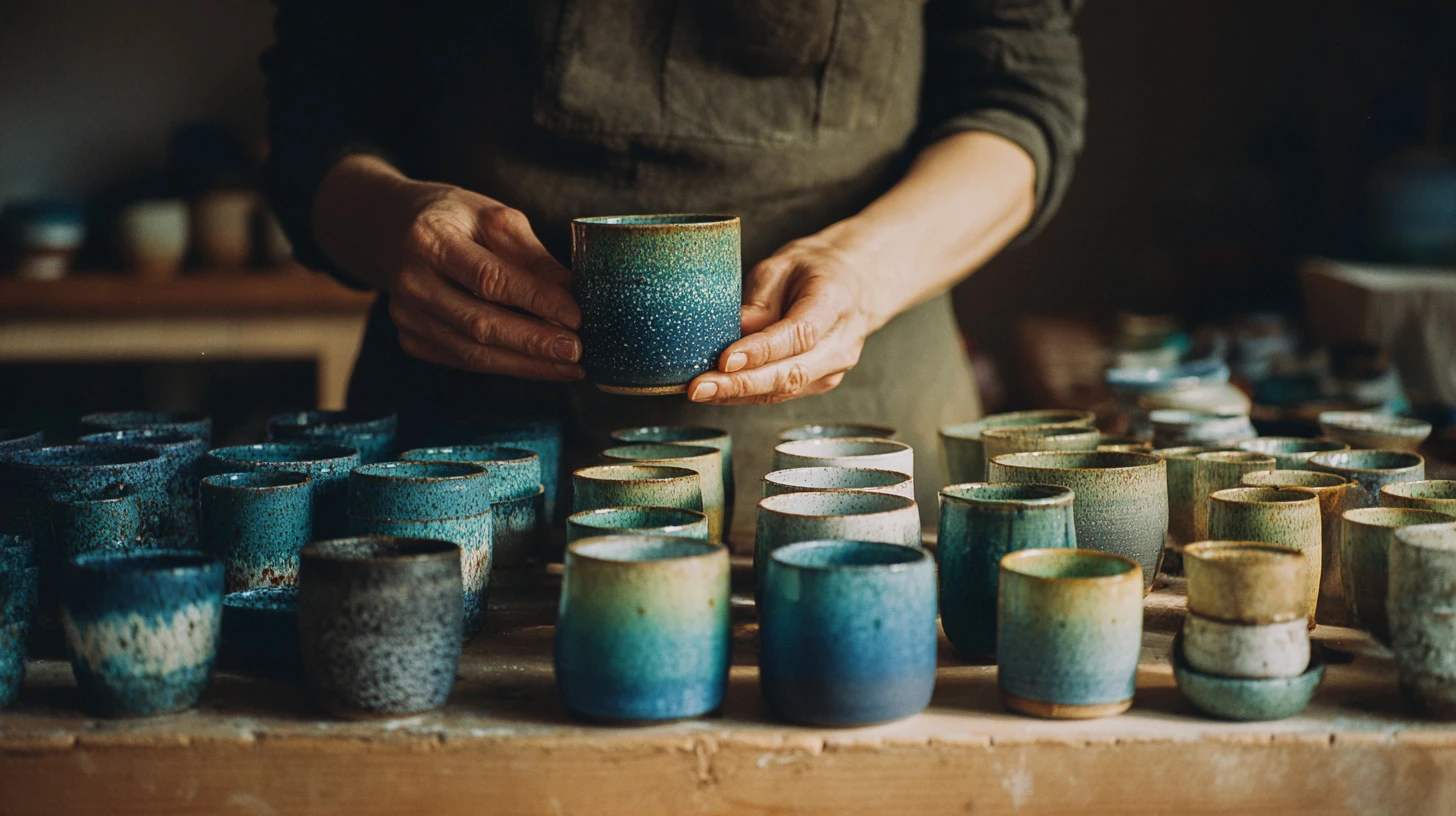
But when you start selling your work, especially online, how your pieces sit together starts to matter. Not because everything needs to match, but because people need help understanding what they’re looking at and why it belongs together.
This is where collection thinking can be useful. Not as a creative limitation, but as a quiet structure around your work.
From One-Offs to Collections
A collection doesn’t have to be a strict set of identical objects. It’s more about giving your work a shared context.
Ask yourself:
-
What materials keep returning in my work?
-
Are there colours, forms, or themes I naturally come back to?
-
Is there a mood or atmosphere that runs through what I make?
When pieces share one or two of these elements, they start to speak to each other. That’s often enough for a collection.
For the customer, this makes your work easier to read. For you, it creates a sense of direction without forcing you into repetition.
Repeating a Piece Is Not a Failure
Many makers hesitate to repeat a piece because it feels less original. But repetition is often what allows your work to find its place in the world.
Repeating a piece can:
-
Build recognition and trust
-
Give you space to refine rather than constantly reinvent
-
Make pricing and production more sustainable
A good rule of thumb is this:
If a piece still feels meaningful to make, and people respond to it, it’s worth repeating.
You don’t have to repeat everything. Some pieces are meant to stay singular. Others become anchors within a collection.
Both have a role.
Cohesion Without Losing Freedom
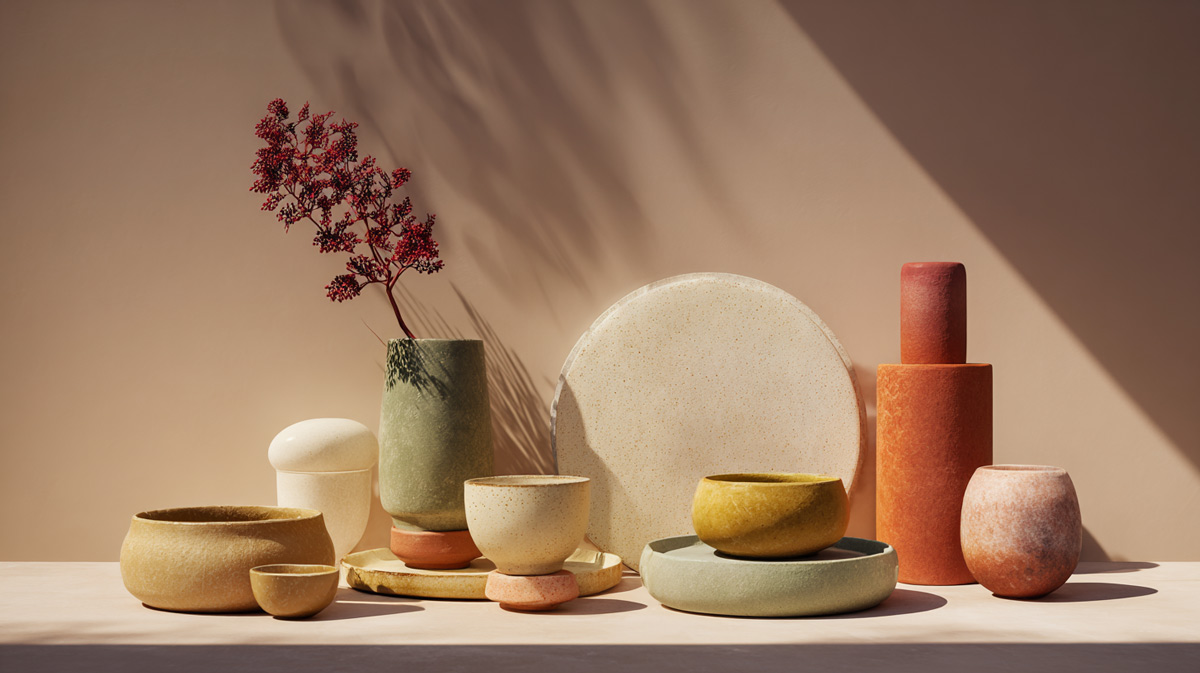
Cohesion doesn’t mean everything looks the same. It means there’s a thread people can follow.
This thread might be:
-
A material
-
A technique
-
A colour palette
-
A way of working
-
A recurring form
Limiting one or two variables often creates more freedom elsewhere. When the framework is clear, your creativity can move more confidently inside it.
How Many Products Are Enough?
This is a common concern before a launch.
The honest answer is: fewer than you think.
For an online shop, a small, focused selection often works better than a large, scattered one. Five to ten well-considered pieces can be enough to communicate who you are and what you do.
What matters more than quantity is clarity. Does it feel intentional? Do the pieces belong together?
Online Launch vs Physical Market
Work that functions well at a physical market doesn’t always translate directly online.
In person, people can:
-
Touch materials
-
See scale
-
Meet you
-
Ask questions
Online, your work has to do more on its own.
This means:
-
Clear photos from multiple angles
-
Context images that show scale and use
-
Text that explains what can’t be touched
For an online launch, it often helps to simplify. Fewer pieces, shown well, with space around them.
When a Collection Feels Intentional
A collection feels intentional when:
-
Each piece has a reason to be there
-
Nothing feels rushed or added just to fill space
-
There is room to understand the work
Intentional doesn’t mean perfect. It means considered.
If you’re unsure whether something belongs, that hesitation is often telling you something.
A Final Thought
Thinking in collections is not about becoming more commercial. It’s about making your work easier to meet.
Your role is not to explain everything, but to create a clear enough framework that people can step into your world without feeling lost.
And that can start with exactly what you’re already doing. Just seen from a slightly different angle.

Related Blog
TAKE GOOD PRODUCT PHOTOS WITH JUST A PHONE
Nov 12, 2025 by BamAdmin
Business inspiration for Makers